
Music every child can sing, no matter what language is spoken at home.
Mavi & Friends make joyful songs from the sounds of human speech instead of words. A toddler in Seoul, a toddler in São Paulo, and a toddler in Texas can all sing the same song, because these songs belong to every language and none.
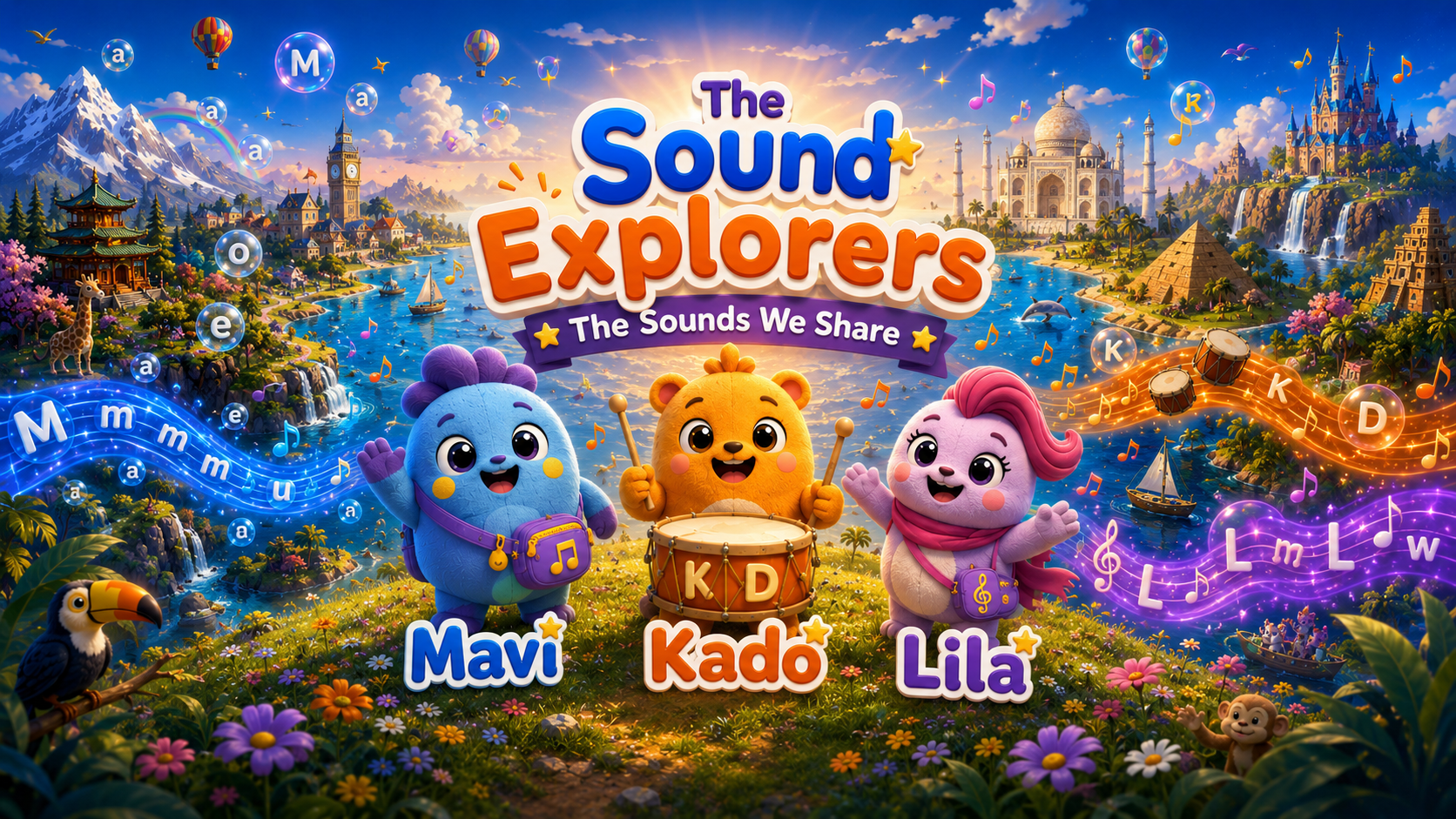
Three friends, one big world of sound.
Mavi, The Sound Explorer
Mavi is curious about everything. He is the first to spot a new sound, a floating Sound Bubble, or a land nobody has visited yet. When Mavi tilts his head and reaches out, your little one will too.
Kado, The Rhythm Explorer
Where Mavi asks “what is this?”, Kado answers “let’s play with it!” He turns every discovery into a bounce, a clap, a stomp, or a dance. Kado is the reason your living room becomes a dance floor.
Lila, The Melody Explorer
When Lila arrives, the wind changes. Ribbons flow, petals rise, and single sounds become melodies. She brings the beauty, the calm, and the songs that stay with you at bedtime.
Before children learn words, they learn sounds.
In their first years, children are listening machines. Babies start out hearing an enormous range of speech sounds, then gradually tune in to the sounds they hear most often. That early window is where these songs live.
Every Mavi & Friends song is built from real speech sounds found across the world’s languages: the hums, pops, rolls, and whooshes humans everywhere use to talk to each other. The lyrics are joyful nonsense on purpose. There is nothing to translate, so every child hears the same song the same way.
Each song also pairs its sounds with one simple movement families can do together: bounce, march, twirl, sway, or rock. Moving together is half the fun and most of the magic.
What we promise: playful early sound exposure, listening, imitation, movement, and music your child will beg to replay.
What we don’t claim: these songs will not make your child bilingual, and we will never tell you they make your child smarter. We keep the science honest because you deserve that, and because the songs are good enough not to need inflated claims.
Two Ways to Listen
Sound Adventures
Bounce, march, twirl, and dance through the Sound Lands with Mavi, Kado, and Lila. Daytime energy, family movement, pure joy.
Dream Sounds
Gentle lullabies with rain, ocean waves, and the softest sounds human voices make. Built for rocking, settling, and sleep.
Find our music on Spotify, Apple Music, Amazon Music, and YouTube Music. (coming soon)
Get the Free Family Movement Guide
One page per song. Each page shows the movement that goes with it: the bounce for Mama Pata, the twirl for Lala Rara, the slow rock for Nomi Loo. Plus a Sound Passport page your child can stamp for every Sound Land you visit together.
We’ll also send you a short note when a new song comes out: what’s new, the move to try, and one line about the sounds inside it. Written like a note from a fellow parent, because it is. No spam, unsubscribe anytime.